Index
MCP Server + CLI
Stop risky packages before they reach your machine.
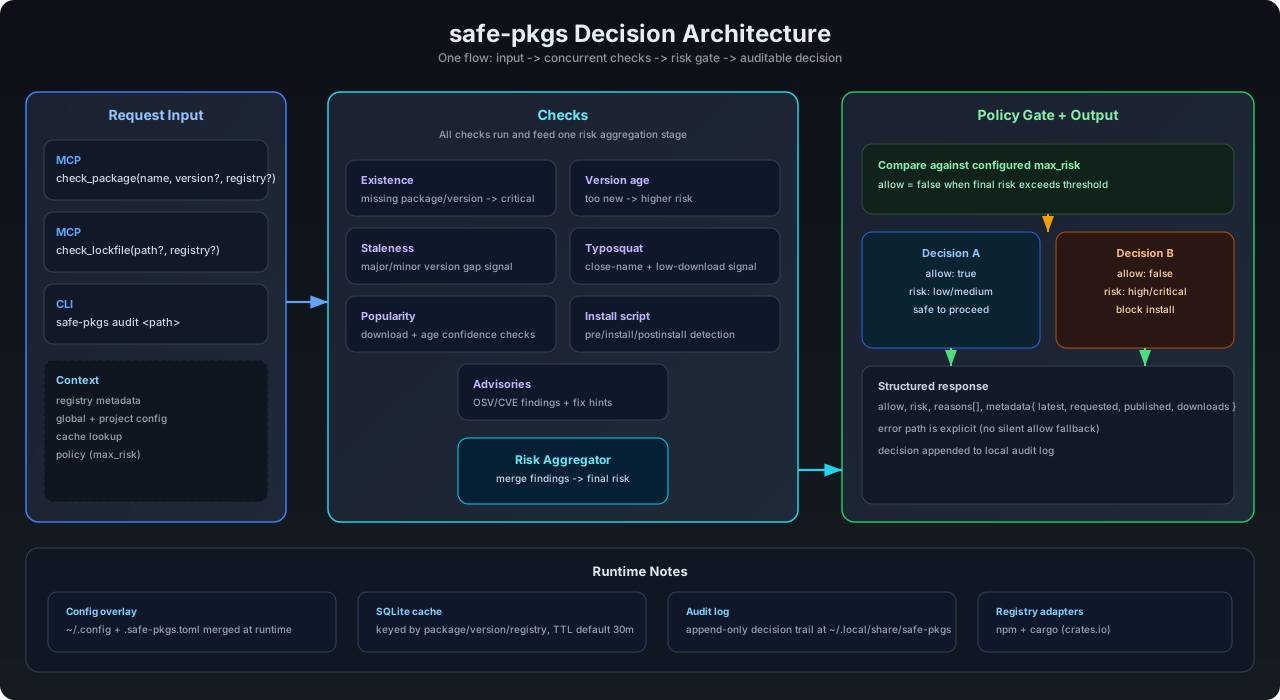
safe-pkgs runs package safety checks before install and returns a single decision your tools can enforce:
allow, risk, reasons, and metadata.
Typical Decision
{
  "allow": false,
  "risk": "high",
  "reasons": [
    "package is too new (published 2 days ago)",
    "postinstall script found"
  ],
  "metadata": {
    "latest": "1.2.4",
    "requested": "1.2.3"
  }
}Cost model
No subscription required.
Local-first runtime
safe-pkgs runs as a local Rust binary (CLI + MCP) and keeps cache/audit artifacts on your machine.
Public data sources
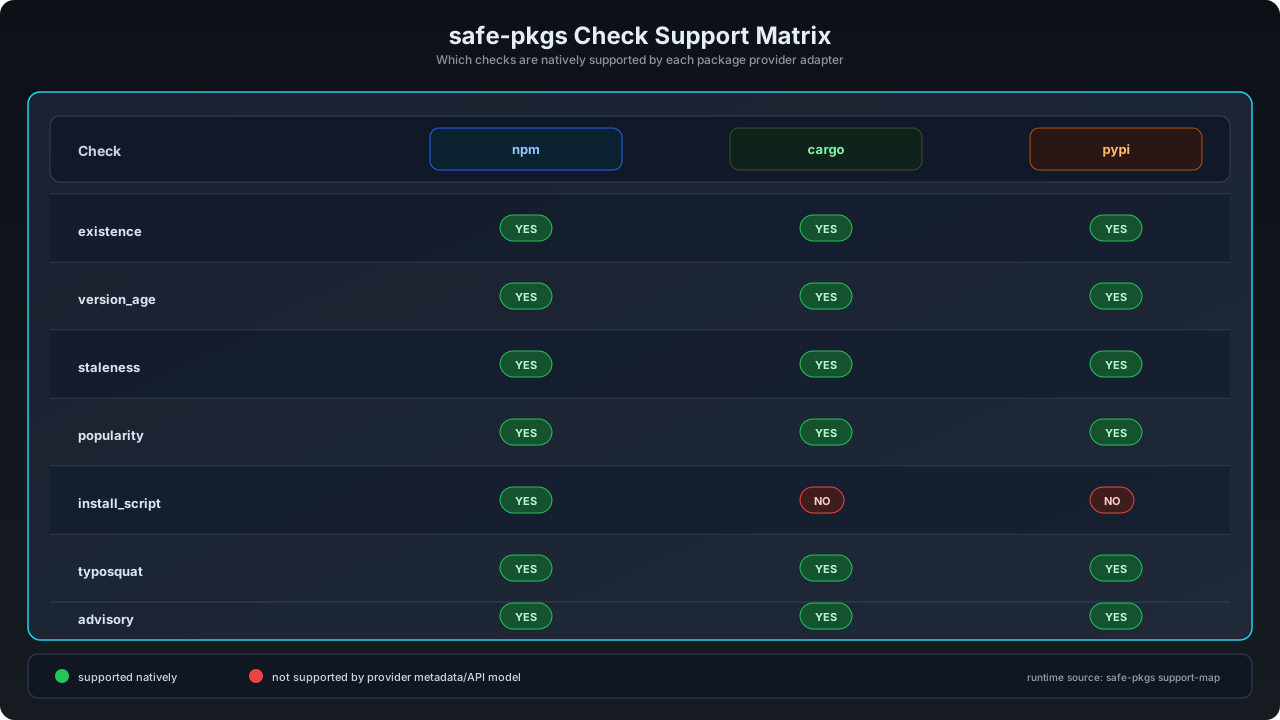
Built-in checks use public registry/advisory endpoints (npm, crates.io, pypi, OSV) with no API key requirement.
Why safe-pkgs
Fast installs are great. Blind installs are not.
Catch common supply-chain risk
Typosquat checks, install-script detection, and advisory lookups reduce obvious package abuse before install.
Enforce policy, not vibes
Configure a max allowed risk. If checks fail or risk is too high, the decision is explicit and machine-enforceable.
Keep decisions auditable
Every decision can be logged with reasons and metadata so teams can review what was blocked and why.
How it works + pipeline
One combined decision map.
Provider matrix
Check support by registry
In-editor flow
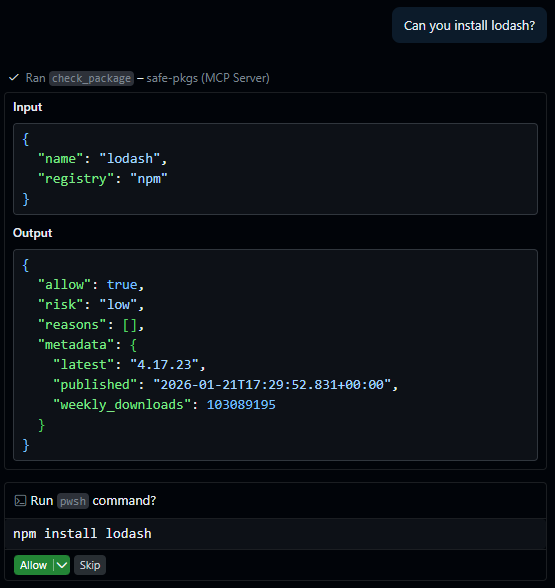
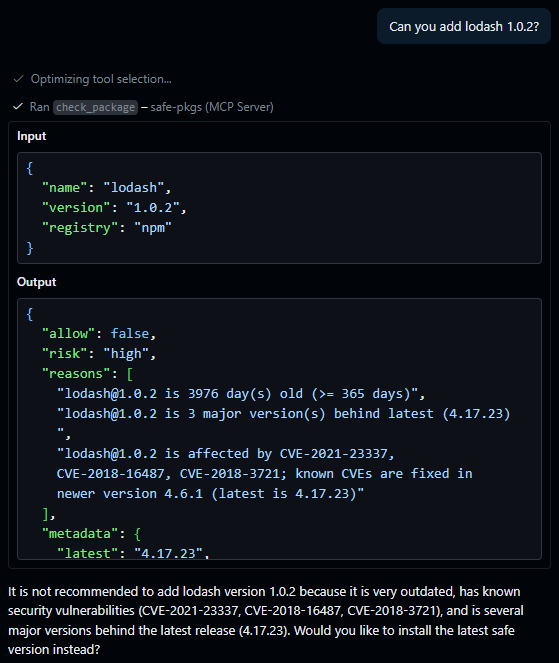
What usage looks like
How to start
Copy, run, integrate.
Build and run MCP server
cargo build --release
./target/release/safe-pkgs serve
Optional: run one-off audit or what-if
safe-pkgs audit /path/to/project-or-lockfile
safe-pkgs simulate /path/to/project-or-lockfile
MCP client config snippet
{
  "servers": {
    "safe-pkgs": {
      "type": "stdio",
      "command": "/path/to/safe-pkgs",
      "args": ["serve"]
    }
  },
  "inputs": []
}